
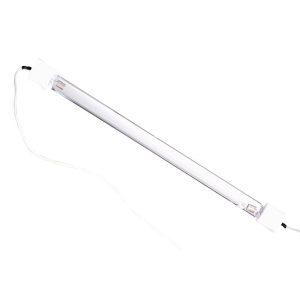
Technical Deep-Dive: Voltage and Power Curve Matching
Here’s the truth: we don’t treat UV lamps like something you just grab off a shelf. We treat them like what they really are—engineered pieces of your machine. The big question becomes: can we dial the internal voltage to match your equipment’s power curve? Spoiler: yes. A standard lamp forces your system into a fixed spot. That’s a recipe for underperformance and burnout. But when we tune the voltage, the lamp pulls power the exact way your system was built to deliver it. No mismatch. A steady arc. And UV output you can count on, every time.
Material and Design: Controlling the Output Profile
Ozone output is all about wavelength—especially that 185nm line. So how do we shape it? We start with the lamp’s chemistry and the quartz envelope, then fine-tune the gas fill and pressure to hit the wavelength profile you need. And the electrical side? The internal voltage adjustment is the lever that controls plasma temperature, which shifts the spectrum. That’s how we land the sweet spot: strong ozone generation, and the heat load your process can actually handle. Bottom line: the lamp is built for a specific job, not a vague “general use.”
Application and Real-World Engineering Trade-offs
When you plug in a custom-voltage UV lamp, you’re solving a real integration headache. It’s a drop-in piece that wires up cleanly and works within your machine’s original thermal and electrical design. No need to rework the power supply. No need to rewrite the control logic. But there is a trade-off. If you’re pushing the lamp to maximize ozone by running at its optimized voltage, your cooling system has to be up to the task. The lamp will run hotter to hit that output, and the surrounding temperature needs to be managed—otherwise long-term stability suffers and you start losing lamp life early.
Application and Benefits: Solving the Engineer’s Problem
This custom approach goes straight after the pain points you feel on the plant floor. When the voltage matches your machine’s power curve, installation stops being a guessing game. The lamp fires up the way it should. It settles into a stable temperature. And it delivers steady ozone without overdriving the system. What does that mean for you? Predictable performance. Less downtime for maintenance. A component that behaves exactly as promised. You get a solution built around your equipment—instead of being forced to bend your machine around the lamp.