
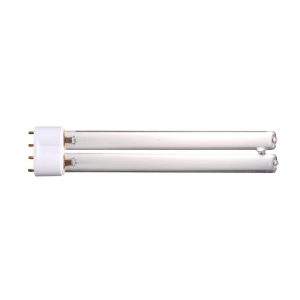
Getting the Light Just Right: The Struggle for 0.5% Precision in GaI Lamps
If you’re working with ultraviolet radiation, you know the drill. Most UV lamps just throw a wide blanket of light at everything. But when you’re trying to trigger a very specific photochemical reaction, that “blanket” approach doesn’t cut it. You need a scalpel, not a sledgehammer. That’s where Gallium Iodide (GaI) lamps come in.
The Battle Against “Waste”
We spent a long time obsessing over one number:0.5%. Why? Because we wanted the energy concentrated in a tiny, tight window. Most of the time, lamps waste a ton of energy as broad-spectrum heat. It’s inefficient. To stop that, we had to get aggressive with the filling pressure and the way the electrodes are shaped. It’s a finicky process. If the pressure is off by even a tiny bit, the peak shifts. Just like that, your concentration is gone. We also hit a wall with the gas mixture. We noticed that if the iodide salt wasn’t pure enough, the spectrum started to “bleed” or broaden. So, we tightened our raw material specs. No shortcuts. Now, the output stays locked exactly where it needs to be.
The Heat Problem
Here is the catch: when you squeeze that much energy into such a narrow space, things gethot. Really hot. That kind of thermal stress can make a standard quartz tube snap. To keep that from happening, we switched to high-purity fused silica. It handles the heat without cracking. But a word of advice: don’t skimp on your cooling. If your airflow is weak, the tube temperature will spike. Not only does that risk burning out the lamp early, but it can actually shift your spectral peak, ruining the precision we worked so hard to get.
Making it Work in Your Shop
We didn’t want you to have to rip out your entire assembly line just to upgrade your light source. That’s why we kept the footprint standard. It’s a simple drop-in replacement. You just wire it to your ballast, calibrate your sensors, and you’re good to go. The best part? Since the light is so precise, you can cut down your curing times. You get the job done faster without accidentally over-cooking your substrate. It just works.